
Directed by
Stuart Rosenberg
127 minutes
Rated M
Reviewed by
Bernard Hemingway

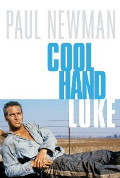
Cool Hand Luke
Paul Newman’s loner character, summed up by the film's title is rooted in the 1950s “rebel” persona (were it re-made today more would be made of Luke as a victim of post-traumatic stress disorder) with which Marlon Brando is invariably associated, this sub-genre classic, made in the anti-establishmentarian late1960s, is of its times and Newman’s performance, one that is in the vein of other films he had made throughout the '60s like The Hustler (1961) and Hud (1963), looks forward to Jack Nicholson’s 1970s variants of the same especially One Flew Over The Cuckoo's Nest (1975).
Based on a novel by Donn Pearce who co-wrote the screenplay with Frank Pierson, Cool Hand Luke is based on Pearce’s own been-there-done-that experiences as the inmate of a prison farm down South. solidly directed by Stuart Rosenberg, who had worked in television previously and never made a film as good as this afterwards, it is for the most part slow-moving but with its well-defined characters and Newman’s irresistible charms, the latter much exploited, particularly in the film’s closing sequence, it is a heroising mix of pulp realism (resulting in much drooling over the female form and Hollywood romanticisation of the indomitable individualist (Newman’s performance in 1969's Butch Cassidy And The Sundance Kid is an even more romanticised portrait of such a character).
George Kennedy won an Best Supporting Oscar for his role as Dragline, the simpleton wanna-be tough guy fellow inmate whose mythicising elevates Luke to heroic status, whilst Strother Martin achieved screen immortality with his line: "What we have here…is a failure to communicate". Harry Dean (then just Dean) Stanton and Dennis Hopper both have minor roles as Luke's fellow inmates.

Want something different?


